Viral ‘US strike on Iran’s Qeshm Island’ footage exposed as AI-generated video
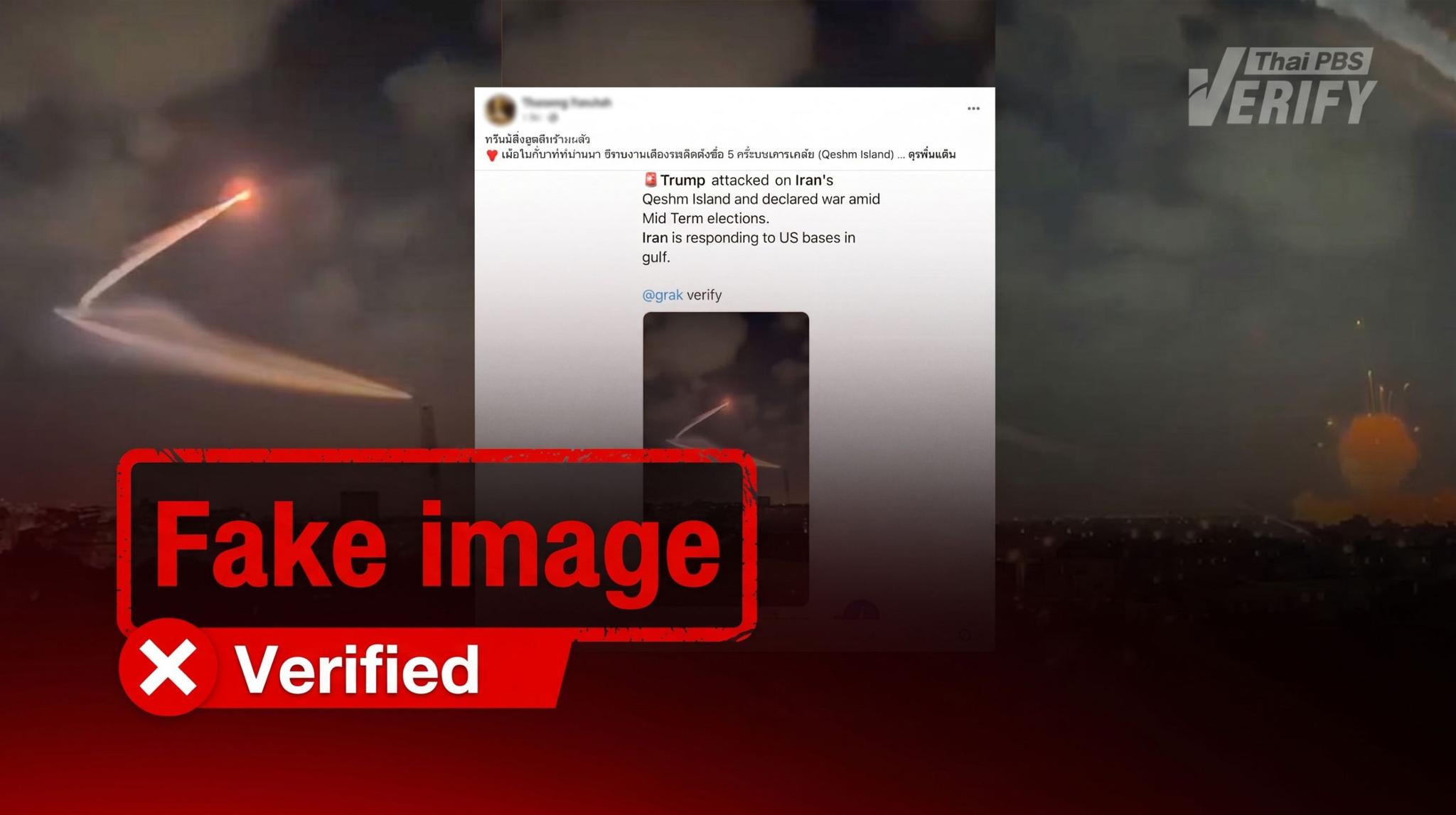
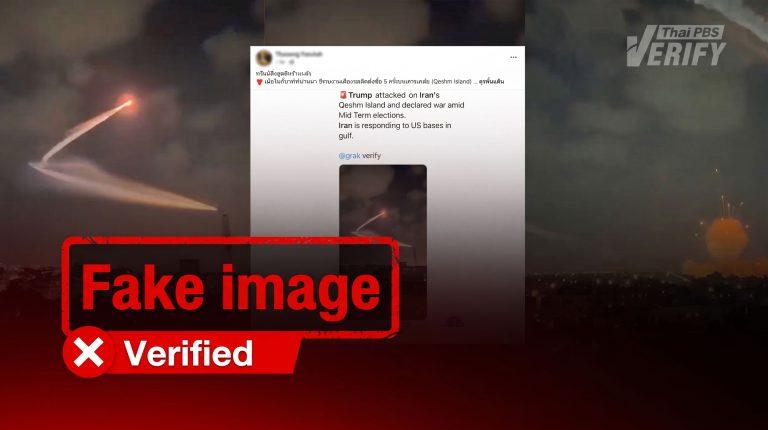
Thai PBS Verify found this fake image on Facebook
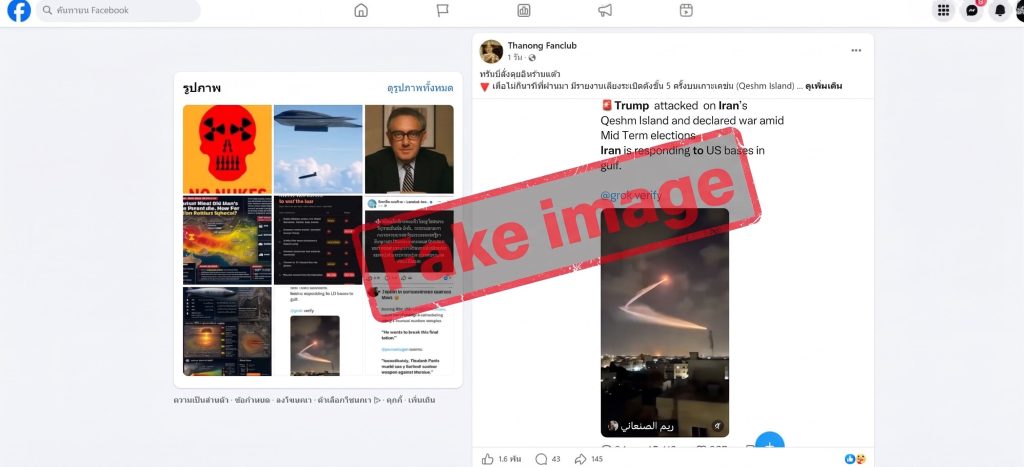
A Facebook account named “Thanong Fanclub” shared the clip on Nov 3, 2026, accompanied by claims that explosions had been reported on Qeshm Island and that US forces had launched military operations there. The post cited reports of multiple blasts, eyewitness accounts and alleged confirmation from US officials.
The post gained significant attention, attracting more than 1,600 reactions and over 140 shares.
Thai PBS Verify also found that parts of the same footage were used in a report published by Top News Online on the same day, which claimed the United States had begun striking Qeshm Island in retaliation for missile attacks targeting US aircraft.
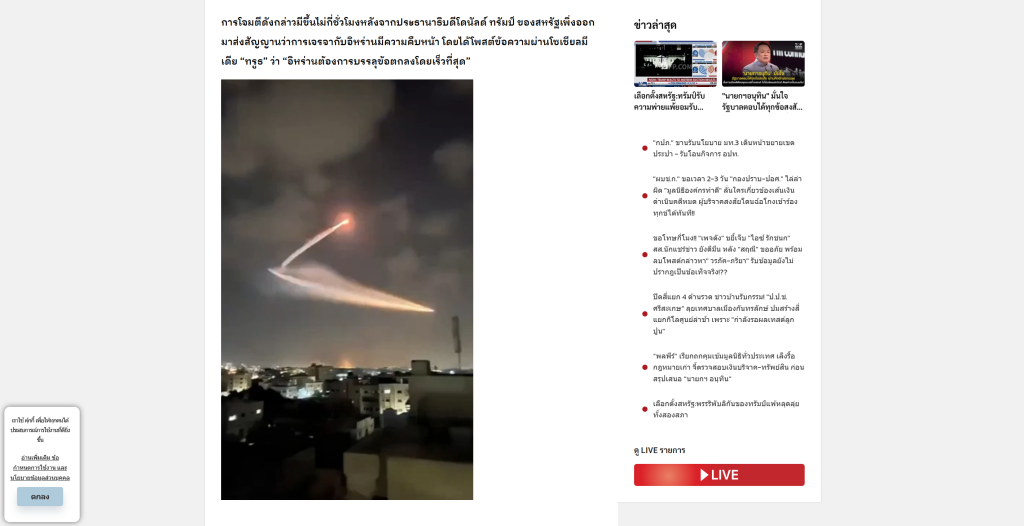
Is the footage real?
Using the InVID-WeVerify verification tool to extract and analyse key frames, Thai PBS Verify identified several visual anomalies suggesting the footage had been generated by artificial intelligence.
At the beginning of the clip, missiles appear suddenly in mid-air without a natural trajectory. Towards the end, explosions occur before the missiles reach the ground, behaviour that contradicts basic physics.
These inconsistencies strongly suggest the video is not genuine footage of real events.
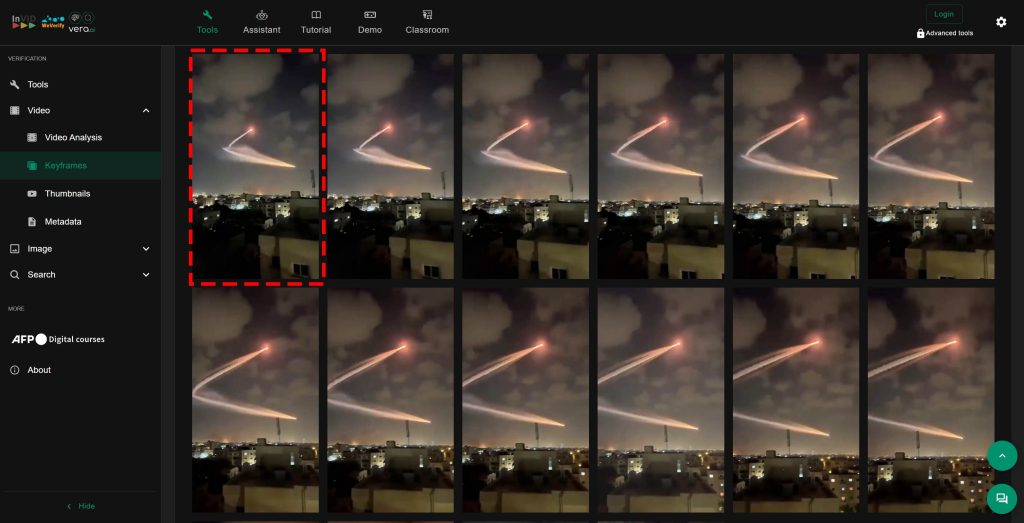
Analysis using InVID-WeVerify found missiles appearing unnaturally within the video sequence.
An example of the examined video clip
AI detection results
Thai PBS Verify also examined the clip using several AI-detection tools.
Meta AI classified the footage as highly likely to have been generated by artificial intelligence rather than depicting a real-world event.
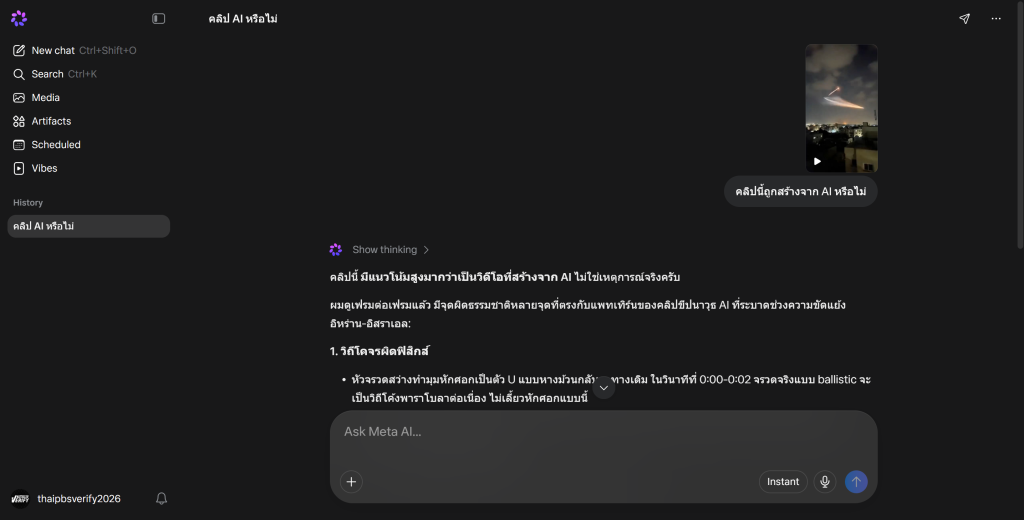
Results from Meta AI analysis.
Hive Detect estimated a 65.1% probability that the video had been AI-generated. At the 10-second mark, that probability rose to 74.7%, with the system indicating possible use of a Seedance2-type generation model.
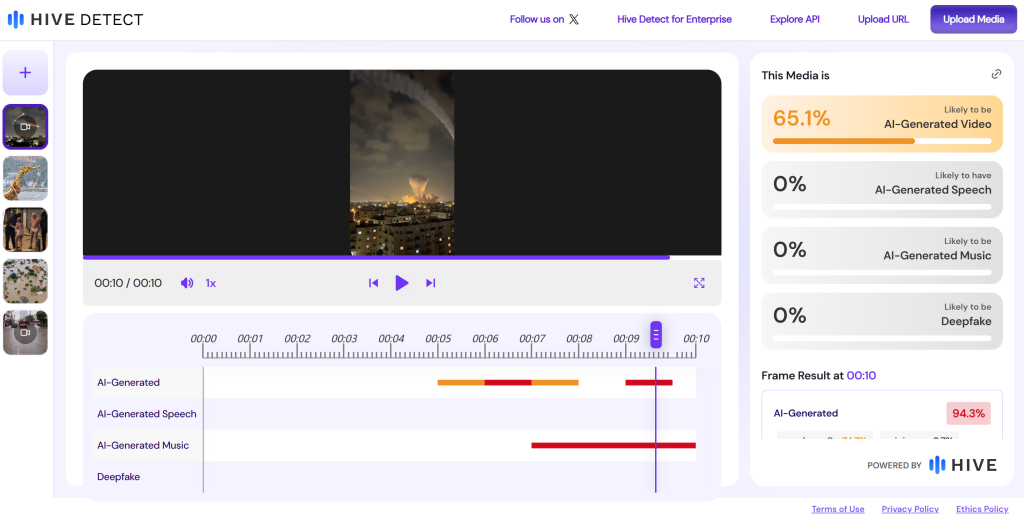
Results from Hive Detect analysis.
A third platform, DeepFakeCheck, also identified digital indicators consistent with AI generation or manipulation.
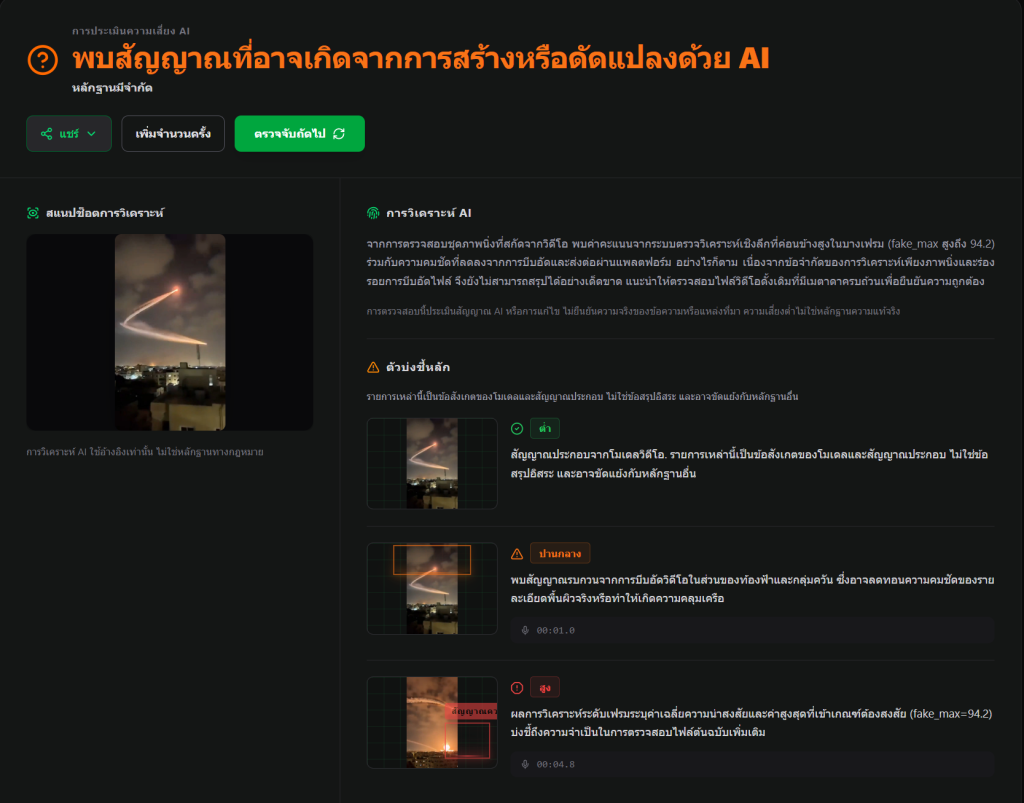
DeepFakeCheck results.
Taken together, the findings indicate the circulating footage was created using AI technology.
Did an actual attack take place?
Although the video itself is fabricated, reports indicate that military action did occur in the region.
According to a Thai PBS report published on Nov 3, 2026, Iran’s state-run IRNA news agency reported multiple explosions late on Nov 2 on Qeshm Island, located off Iran’s southern coast near the Strait of Hormuz. Witnesses reportedly saw two aircraft flying over the island.
Fars News Agency, which is affiliated with the Iranian government, also reported explosions near the port city of Bandar Lengeh, with sounds appearing to come from the direction of the sea.
The Wall Street Journal cited US officials as saying that American forces carried out the operation.
The Associated Press, also citing US officials, reported that the United States launched defensive strikes against Iranian targets in the Strait of Hormuz after Iran allegedly used anti-aircraft missiles against US assets.
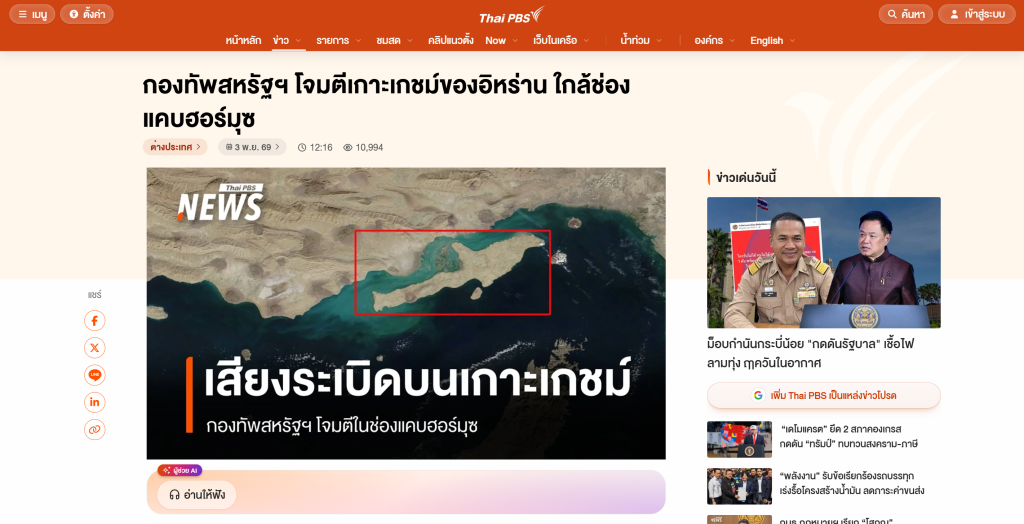
Thai PBS report on the US operation against Iran.
What is the truth?
Thai PBS Verify concluded that social media users and some online media outlets incorrectly presented the AI-generated video as authentic footage of US missile strikes on Qeshm Island and Bandar Lengeh ordered by President Donald Trump.
The crucial distinction is that the military incidents were real, but the video used to depict them was not.
The video was entirely AI-generated
- The footage is synthetic media rather than authentic recordings from the scene.
- Investigators found clear physics-related errors, including missiles appearing abruptly in the sky and explosions occurring before impact.
The military operation was real
- Reports from Thai PBS, IRNA and Fars News Agency all stated that multiple explosions were heard on Qeshm Island and in Bandar Lengeh near the Strait of Hormuz on the night of Nov 2, 2026. Witnesses reportedly observed two aircraft flying over the area.
- The Wall Street Journal and AP quoted US officials as confirming that American forces carried out the strikes in response to Iranian attacks involving anti-aircraft missiles.
Verification Process
- Thai PBS Verify used several methods to assess the authenticity of the footage:
- Frame-by-frame analysis through InVID-WeVerify identified rendering errors typically associated with AI-generated videos.
- Meta AI concluded the clip was highly likely to be AI-generated.
- Hive Detect assessed a 65.1% probability of AI generation, rising to 74.7% for one segment of the clip.
- DeepFakeCheck detected indicators of AI manipulation or synthetic generation.
- Investigators cross-referenced reports from US and Iranian media organisations and confirmed that while military activity occurred, the viral footage was not authentic.
Impact of the false claim
- The misleading video blurred the line between a genuine geopolitical event and fabricated visual evidence.
- By presenting AI-generated imagery as real battlefield footage, online users risked misleading audiences into believing the clip documented actual damage on the ground. Such practices can undermine confidence in journalism and reduce public trust in news organisations.
- The realistic-looking missile strikes shown in the video may also amplify public fear and contribute to heightened anxiety during periods of international conflict.
What to do with this misinformation?
- Distinguish between a real event and the footage used to illustrate it. A genuine conflict does not automatically mean every related image or video is authentic.
- Look for physical inconsistencies in videos, particularly implausible missile trajectories, smoke patterns or explosions.
- Rely on imagery verified by major international news agencies such as Reuters, AP and AFP, which employ geolocation and verification techniques.
- Report misleading content when AI-generated visuals are falsely presented as evidence of real-world events, helping to limit the spread of misinformation online.

Popular Content